HomeApplicationsProductsTechnologyCode-LessAboutResourcesRequest a Demo
Physical AI · Applications

Close the loop.

Six proven applications. One Physical AI platform. Each with a measured outcome, a recommended fleet, and the constraint you should know before you start.

The Applications

Start with the loop. Not the robot.

Every application below is a loop that closes without a person in the middle. If a workflow still needs someone to notice, fetch, and deliver, the loop is open — and the labour is still there. Pick the loop that costs you most, prove it, then expand.

01

Line Feeding (JIT)

The AMR reads the buffer and delivers before it empties. The line never waits for someone to notice. 99.7% on-time, WIP down 25%.

99.7% On-Time →
02

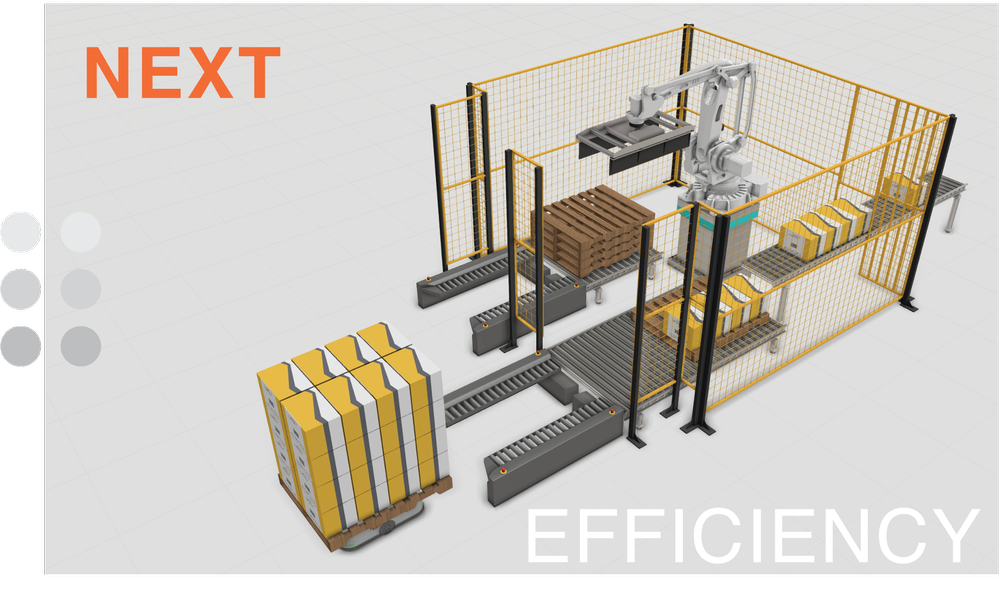
Pallet Transport

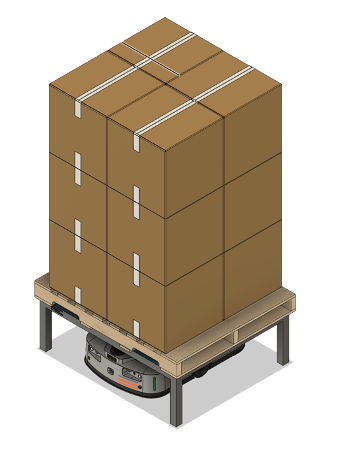
Dock to storage, storage to line, line to dock — routed around congestion instead of waiting in it. 3× throughput, 50% less labour on transport.

3× Throughput →
03

Goods-to-Person Picking

Totes and bins come to the station. The picker stays put; the walking leaves the shift. 3× picking throughput.

3× Picking →
04

Stacking & Retrieval

Put-away, retrieval, and high-bay stacking — to 2,000 mm, or 4,500 mm with counterbalance. One robot, two operations.

4.5 m Lift →
05

Narrow-Aisle Heavy Pallet

1,500 kg pallets through 2.25 m aisles and 7% ramps — a robot that never cuts the corner.

1,500 kg →
06

End-to-End Warehouse Automation

Receiving through shipping, orchestrated by one Fleet Manager and integrated with your WMS/ERP — up to 50 AMRs.

50 AMRs →
Application 01

Feed the line. Never stop it.

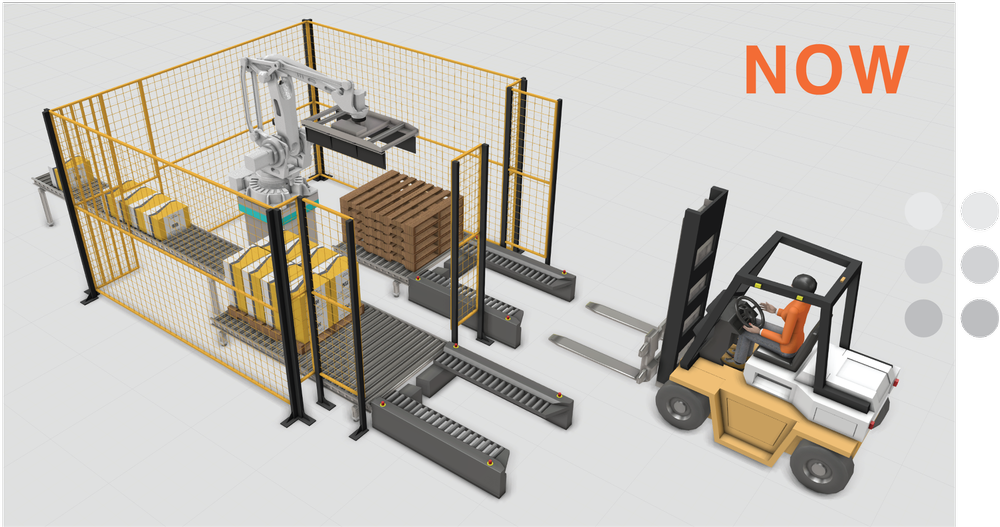
The open loop. A buffer runs low. Someone notices. Someone fetches. The line waits — four minutes on a good day, longer at shift change.

The closed loop. The AMR reads the buffer level, picks the replacement from staging, and docks before the buffer empties. 99.7% on-time.

  • → X13 — 600 kg component delivery
  • → X22 — 1,000 kg palletized supply
  • → S130 — small-parts JIT
  • → WIP at line reduced up to 25%

Constraint: needs stable staging positions and a defined buffer signal — sensor, WMS call, or scheduled cadence.

99.7% On-Time · 25% WIP Reduction
Line feeding
Application 02

Move pallets. Not people.

The open loop. A forklift crosses the plant during shift change. Traffic, waits, variability. Throughput depends on who is driving.

The closed loop. Dock to storage, storage to line, line to dock — dynamically routed around congestion. 3× the throughput of manual transport.

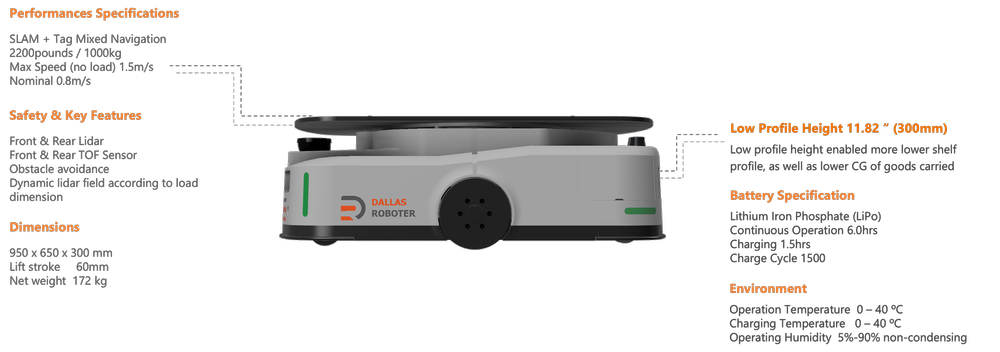
  • → X22 — 1,000 kg general transport
  • → X33 — 1,500 kg heavy handling
  • → PX33 — pallet-jack operations
  • → CX33 — loading/unloading

Constraint: pallets must sit within the robot's approach envelope. Badly wrapped or off-centre loads are handled during deployment mapping.

3× Throughput · 50% Labor Reduction
Pallet transport
Application 03

Bring the goods to the person.

The open loop. Pickers walk. Ten to fifteen kilometres a shift — and the walking, not the picking, is the bottleneck.

The closed loop. Totes and bins come to the station. The picker stays put. 3× picking rate.

  • → S130 — 3.0 m/s tote transport
  • → X13, X22 — larger loads
  • → 3× picking throughput
  • → ROI in 14 months

Constraint: best where SKUs live in totes or bins and the station layout has room for a docking lane.

3× Picking Throughput
Goods-to-person picking
Application 04

Store and retrieve. Automatically.

The open loop. Put-away and retrieval at height, done by hand or by a forklift that could be doing transport work.

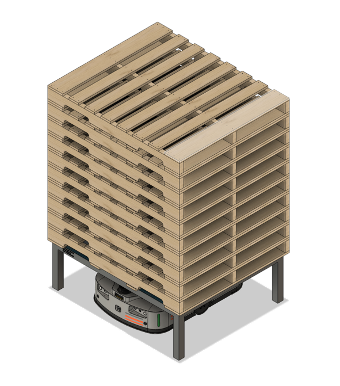
The closed loop. One robot moves the pallet across the floor and places it at height — 2,000 mm, or 4,500 mm with counterbalance.

  • → FX33 — 2,000 mm stacking & retrieval
  • → FX33 Pro — US-edition stacker
  • → CX33 — 4,500 mm counterbalance
  • → WMS/ERP integration for put-away

Constraint: aisle width. FX33 operates from 2,338 mm; CX33 needs the clearance a counterbalance truck needs.

4.5 m Lift · 1,500 kg
Stacking and retrieval
Application 05

Heavy pallets. Thin aisles.

The open loop. 1,500 kg pallets through a 2.25 m aisle and a 7% ramp, moved by a driver who has to be right every time.

The closed loop. The same moves, with a robot that never gets tired and never cuts the corner. Safer than a forklift, more consistent than a temp.

  • → X33 — 2.25 m aisle width
  • → CX33 — 4.5 m lift height
  • → 7% gradeability for ramps
  • → Electromagnetic service brake

Constraint: floor condition and grade. 7% gradeability is the envelope; steeper ramps need a different design conversation.

1,500 kg Capacity
Heavy pallet handling
Application 06

Automate the whole floor.

The open loop. Receiving, put-away, picking, and shipping each optimised separately, with people carrying information between them.

The closed loop. Receiving through shipping, orchestrated by one Fleet Manager, integrated with your WMS/ERP over REST.

  • → Platform AMRs for tote transport
  • → Fork AMRs for pallet handling
  • → WMS/ERP via REST API
  • → Start with one zone, expand incrementally

Constraint: this is a sequence, not a first project. Close one loop, measure it, then expand to the next.

50 AMRs · One Interface
End-to-end warehouse automation
The Shift

Open loop → closed loop.

Before. The open loop.

Someone has to notice, fetch, and deliver. The labour is the loop.

  • $73,000 per year on non-value transport (2 operators)
  • Line stoppages at $22,000 per minute in automotive
  • Variable throughput depending on shift and staff
  • Layout changes mean new tape, new construction, new downtime
  • Peak seasons require hiring surges and training

After. The closed loop.

The robot perceives, decides, and acts. Your team handles the exceptions.

  • 3× throughput improvement vs manual transport
  • 99.7% on-time JIT delivery. Lines don't stop.
  • 24/7 consistent operation with opportunity charging
  • Zero infrastructure changes. SLAM re-maps immediately.
  • Scale from 3 to 100+ AMRs without hiring or training
From Application to Fleet

One loop. Then every loop.

Every deployment starts with a single workflow. Proven ROI on one loop funds the next — and the same platform, software, and fleet scale with you.

01

Close One Loop

Pick the highest-cost workflow. Pilot 3–8 AMRs on a defined lane.

02

Prove ROI

Measure throughput, on-time, and labour savings against the baseline.

03

Add Loops

Extend the same fleet to pallet transport, goods-to-person, and put-away.

04

Run the Floor

Scale to 50+ AMRs, one interface, WMS/ERP integrated. No per-robot SaaS fees.

Which loop is yours?

Tell us the loop that costs you most. We'll walk it, find the constraint, and tell you honestly whether a robot closes it.