Mobile robots that run the full loop — perceive, decide, act, learn — inside real facilities. Line feeding, pallet transport, goods-to-person picking, put-away, and heavy handling. Payloads from 60 kg to 1,500 kg, SLAM navigation, no floor markers, SGS-certified safety. Operational in 2–4 weeks.
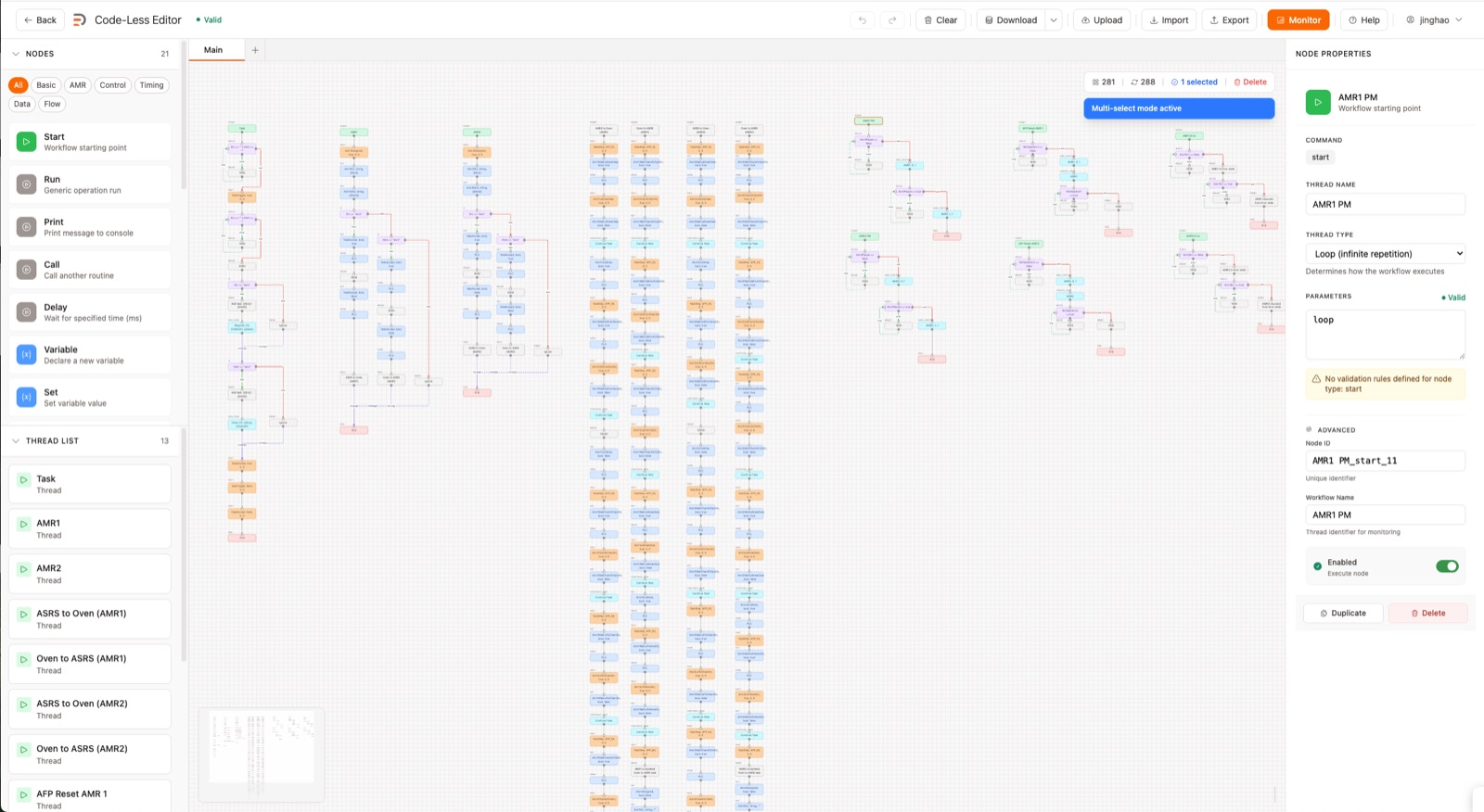
How it's run: Code-Less — the no-code WCS platform
Eight bodies, one intelligence. S130 to CX33.
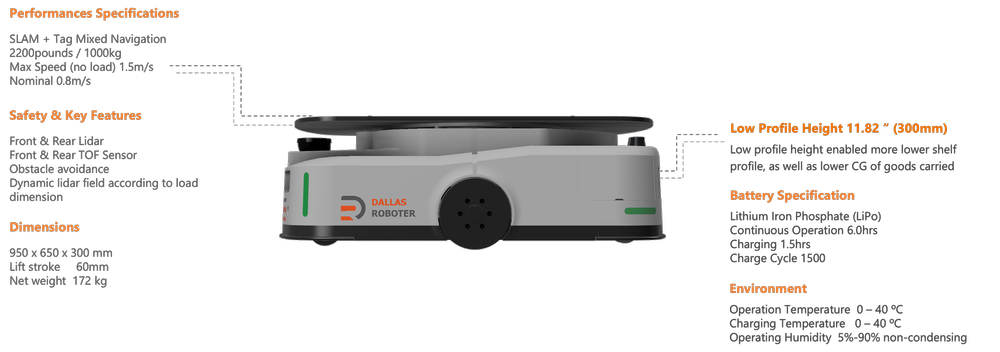
Heavy pallet handling through 2.25 m aisles. 7% gradeability.
Position repeatability at every transfer point, at rated load.
Assessment to operational robots. No floor markers, no construction.
Start with the work, not the hardware. Six closed loops — each with a measured outcome, a recommended fleet, and a path that expands as you prove ROI.
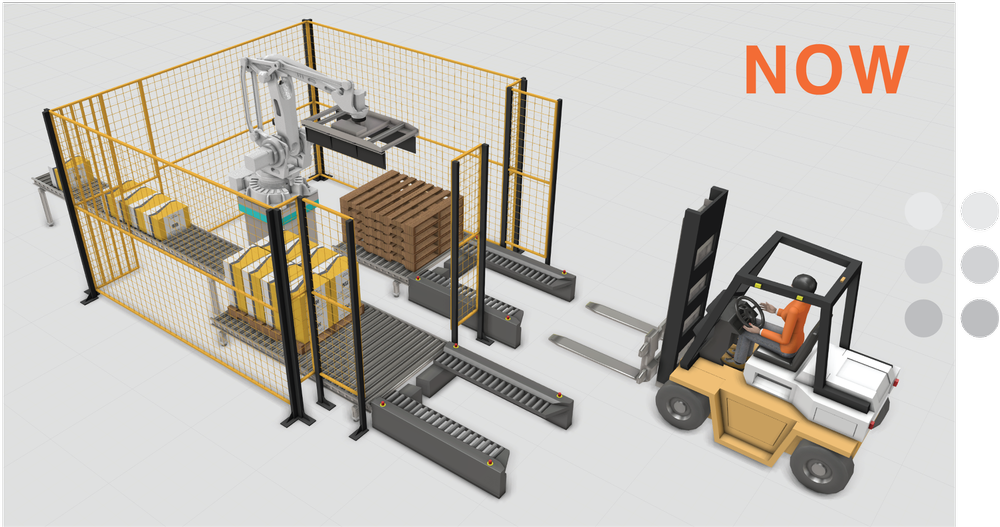
The AMR reads the buffer and delivers before it empties. The line never waits for someone to notice.
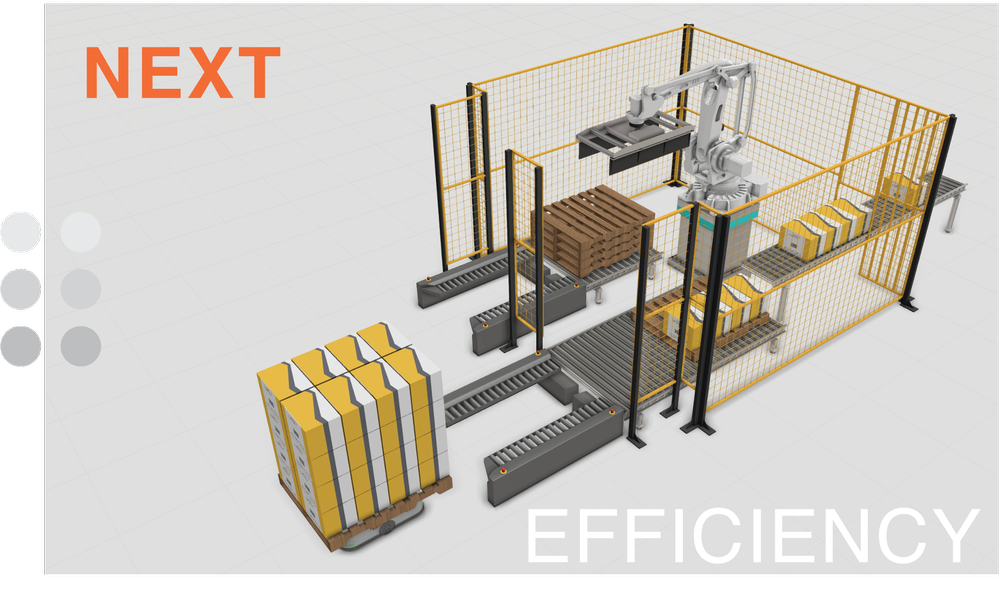
Dock to storage, storage to line, line to dock — routed around congestion instead of waiting in it.
Totes and bins come to the station. The picker stays put; the walking leaves the shift.
Put-away and retrieval to 2,000 mm, or 4,500 mm with counterbalance. One robot, two operations.
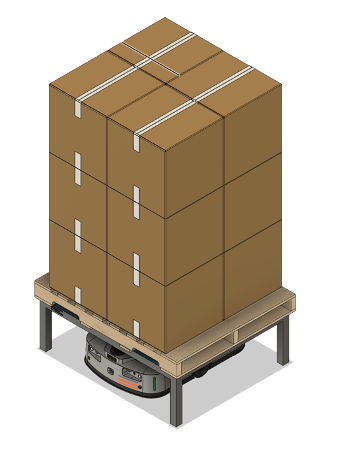
1,500 kg pallets through 2.25 m aisles and 7% ramps — a robot that never cuts the corner.
Receiving through shipping, orchestrated by one Fleet Manager and integrated with your WMS/ERP.
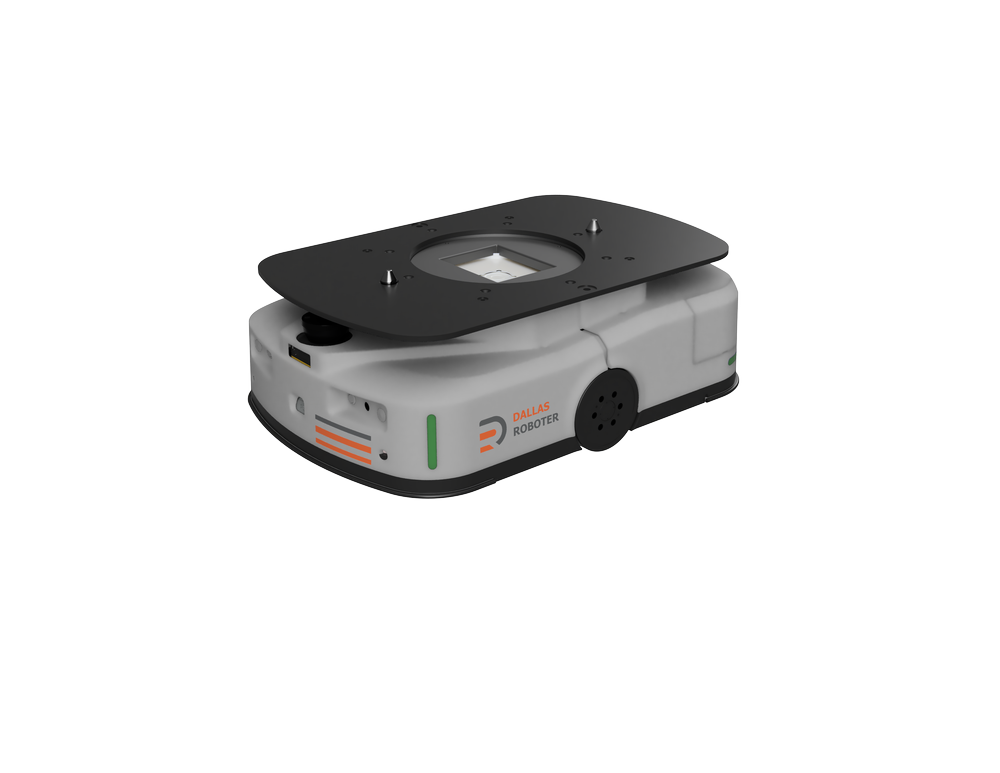
The body changes with the work. The intelligence does not. Every AMR in the fleet shares one navigation stack, one safety architecture, and one Fleet Manager — so what one robot learns, the fleet knows.

Robot and process workflows live on a visual, node-based canvas — no developer, no downtime. The operator who understands the process can change the process: design, validate, execute, monitor, improve.

The AMR uses LiDAR to build a map of the building in real time. No floor markers. No magnetic tape. No construction. Walls, pillars, and racking are the reference points.
At transfer points, DM Code tags provide ±10 mm precision and ±1° angular accuracy — so the loop closes exactly where precision is required.

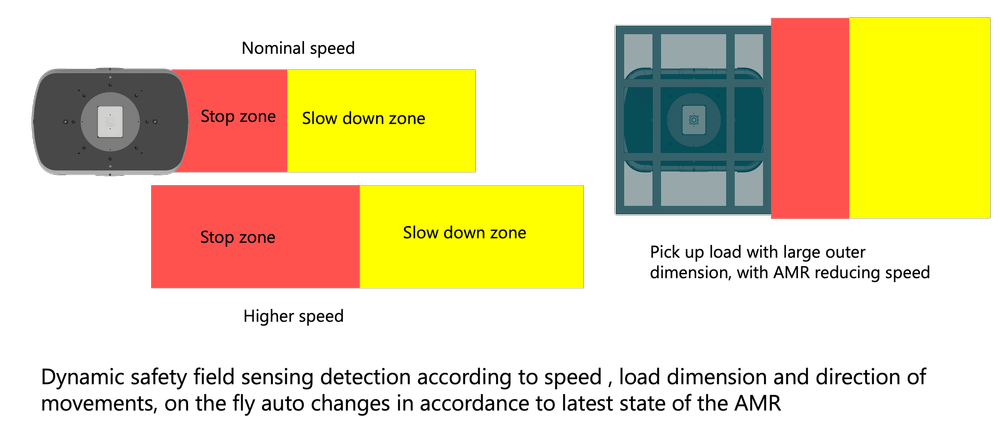
Safety is a constraint on every decision the robot makes, not a feature bolted on at the end. Independently certified by SGS — standard on every model.
Dual safety-rated LiDAR with 510° combined coverage. Dynamic safety fields that widen with speed and load, and tighten for precision maneuvering.

Up to 50 AMRs from a single interface. WMS/ERP integration via REST API. No per-robot SaaS fees.
Opportunity charging coordinates energy across the fleet: 8 hours rated operation, 1.5–2 hours to full charge, no dedicated charging downtime.

| Method | Infrastructure | Deployment | Flexibility | Maintenance |
|---|---|---|---|---|
| SLAM + Tag (DR) | None | 2–4 weeks | Any path, dynamic | Low |
| QR Code | Codes in floor | 2–6 weeks | Fixed paths | Medium |
| Magnetic Tape | Tape throughout | 4–8 weeks | Fixed paths | High |
| Laser Reflectors | Reflectors on walls | 3–6 weeks | Line of sight only | Medium |
Someone has to notice, fetch, and deliver. The labour is the loop.
The robot perceives, decides, and acts. Your team handles the exceptions.
Walk the floor. Find the binding constraint. Define the loop worth closing first.
Model fleet performance against your parameters. Prove it before you commit.
2–4 weeks from assessment to operational. The robot maps the building. No construction.
The loop learns your facility. Telemetry and Code-Less keep it matched to the floor.
Start where the ROI is fastest — usually one bottleneck workflow: a single line-feeding loop or a high-traffic transport lane. Most customers pilot one zone in 2–4 weeks, prove payback, then expand.
An AGV follows infrastructure you build — magnetic tape, wire, or QR codes embedded in the floor. Change the layout and you change the infrastructure. An AMR uses SLAM to build its own map of the building, so a layout change is a re-mapping exercise, not a construction project.
It depends on payload, environment, and application. Platform AMRs (S130–X33) handle 60–1,500 kg; fork AMRs (PX33–CX33) handle pallet movement, stacking, and counterbalance work. Most customers start with a 2–3 unit pilot.
The AMR uses LiDAR to build a map of the environment in real time and tracks its position against it — simultaneously localising and mapping. Walls, pillars, and racking are the reference points. No floor markers required.
UL 3100 (North America) and EN 3691-4 (Europe), independently certified by SGS. Standard on every model — not an upgrade.
12–18 months. One AMR replaces roughly 1–1.5 operators per shift. Labour savings, throughput gains, and avoided facility modification costs all contribute to payback.
Tell us the loop that costs you most. We'll walk it, find the constraint, and tell you honestly whether a robot closes it.
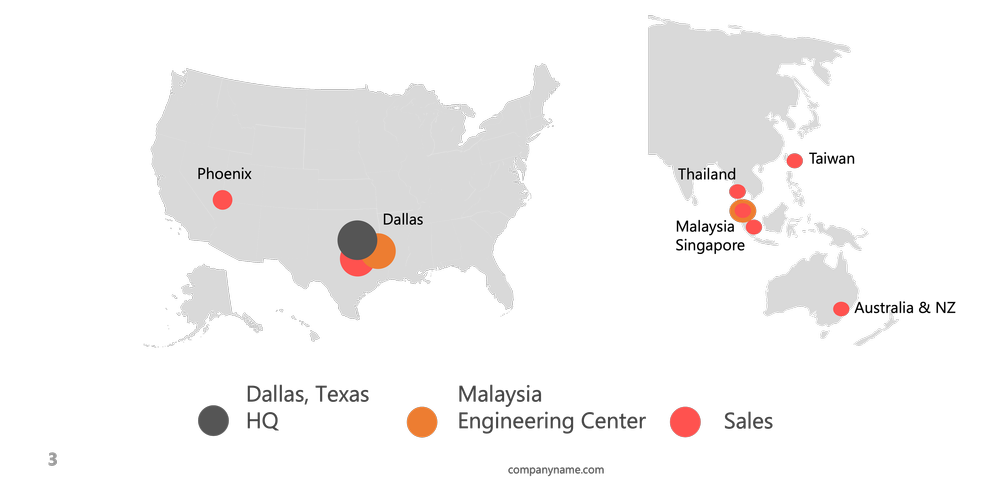
askme@dallasroboter.com · DFW, Texas · Engineering: Cyberjaya, Malaysia